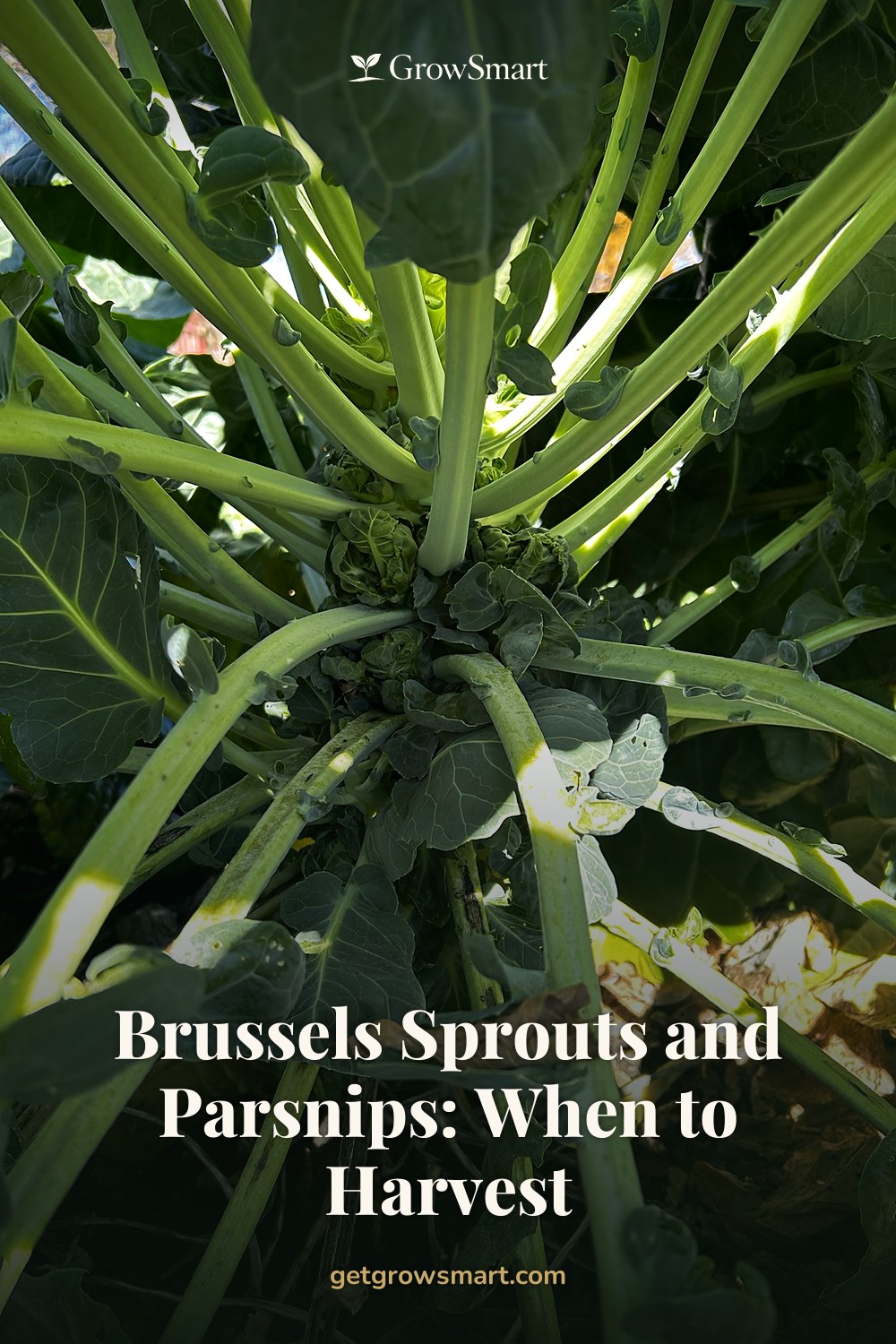
Brussels sprouts and parsnips are usually the last crops standing in a fall garden. Both improve with cold, and both show you at harvest exactly what happened months earlier.
On October 21 my garden had both: Brussels sprouts with loose, leafy sprouts, and parsnips with forked roots. Neither is a harvest problem. One is a timing problem and one is a soil problem, and both can be fixed next season.
Why Brussels sprouts come out loose
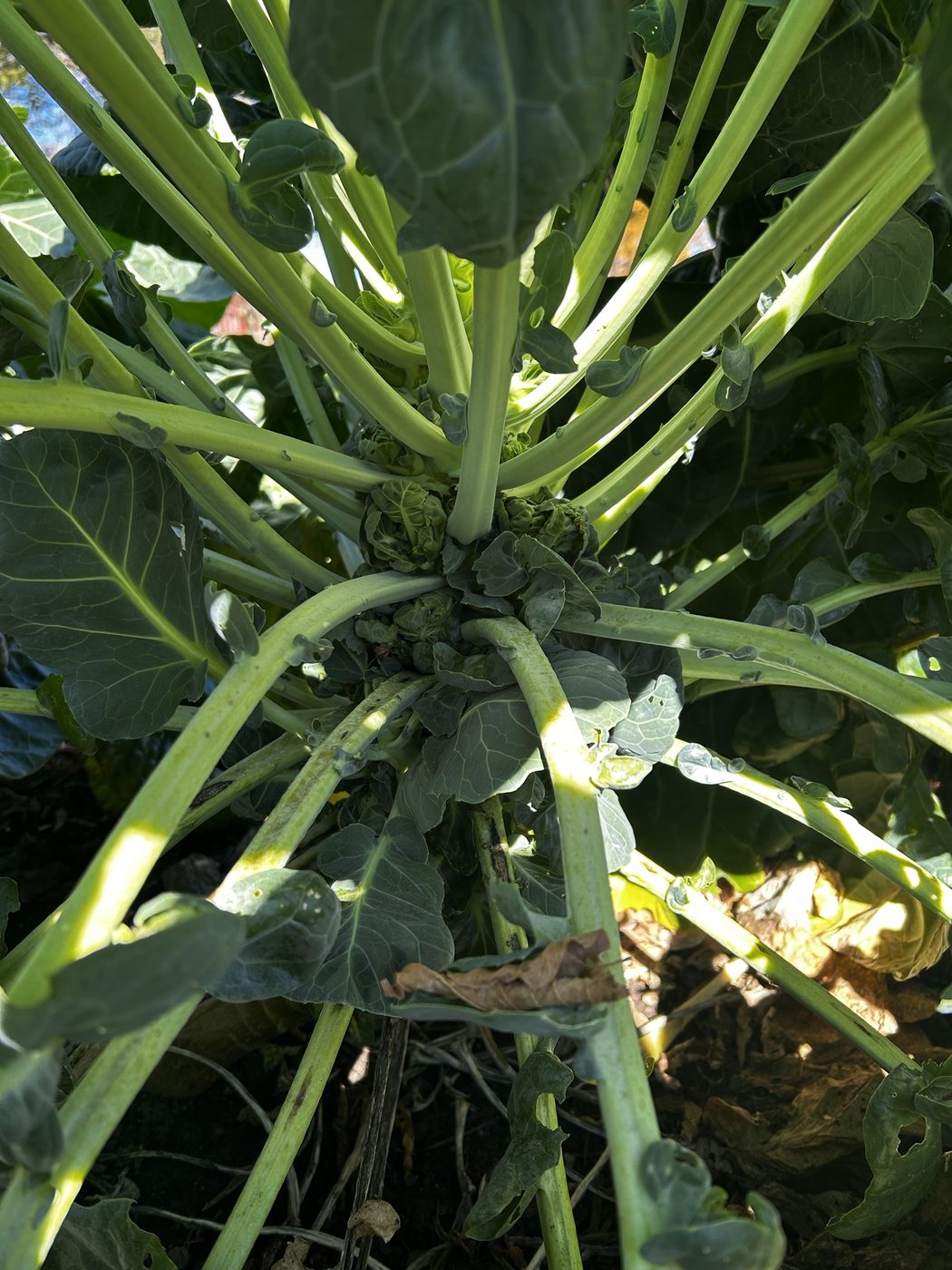
Brussels sprouts are a temperature crop. University of Arkansas Extension says they produce best "when daytime temperatures average about 65 degrees F or less," and that "when the sprouts develop in hot weather (this may be spring or fall), they often do not form compact heads." University of Maryland Extension adds that plants maturing in hot, dry conditions may turn bitter or fail to form compact sprouts.
The word that matters is develop. The plant can grow through summer heat. What decides sprout quality is the weather while the buds along the stem are swelling. If that falls in hot or dry weather, you get loose tufts of leaves instead of firm buttons. Timing is the cause you can plan around.
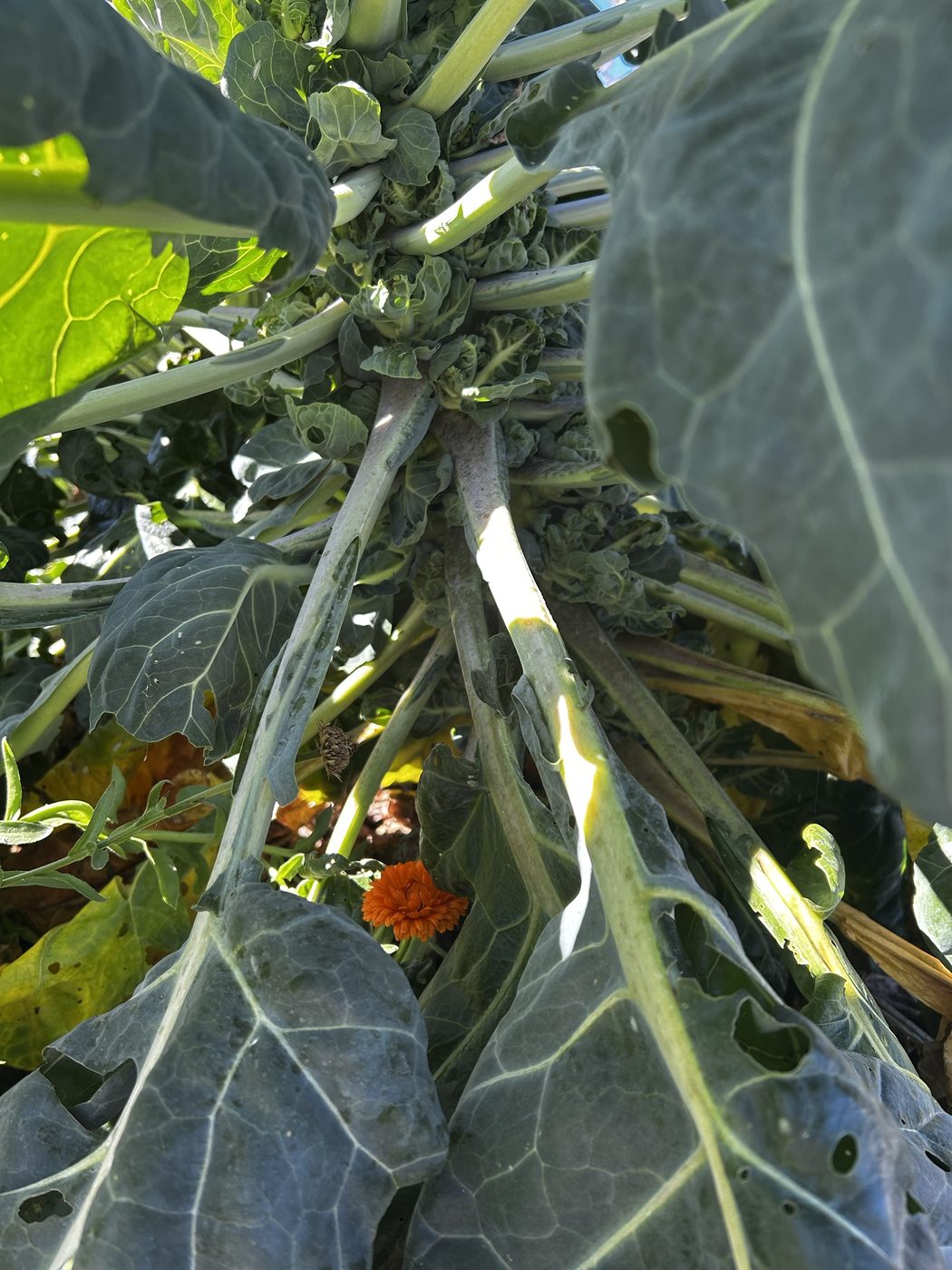
When and how to harvest Brussels sprouts
- Start at the bottom. The lowest sprouts mature first, according to both Arkansas and Maryland Extension.
- Pick them firm and about 1 inch across. Arkansas says to pick when sprouts are "firm and about 1 inch in size." Maryland describes them as hard, compact, deep green and about 1 to 1.5 inches. Snap, twist or cut them from the stem.
- Remove lower leaves as you go. Arkansas advises removing the lowest leaves when you harvest the sprouts beside them, and says two or three more can come off each week as long as several leaves stay on top. Stripping leaves early speeds harvest, but Arkansas notes it is "not necessary in the home garden."
- Do not wait too long. Arkansas says to harvest the sprouts before the leaves turn yellow.
Topping: what it does and what it costs
Topping means pinching or cutting out the growing point at the very top of the stem. Arkansas notes that commercial growers top plants to promote sprout growth. Maryland Extension suggests topping when the bottom sprouts are about 1/2 inch across.
The trade-off is yield. In its spring growing advice, Arkansas says removing the growing point "will hasten the development of the sprouts" but will reduce yield by about one-third. Topping makes sense when you are running out of season and want the sprouts already on the stem to finish. If you have a long, cool fall ahead, leaving the top on lets the plant keep forming sprouts higher up.
Let frost touch them first
There is no need to pull the plants on the first cold night. Penn State Extension's York County seed planting guide notes that Brussels sprouts "can be left until after frost, as a light frost actually sweetens their flavor." Purdue Extension says the plants tolerate frost well and "can remain in the garden until after a hard freeze."
When to harvest parsnips
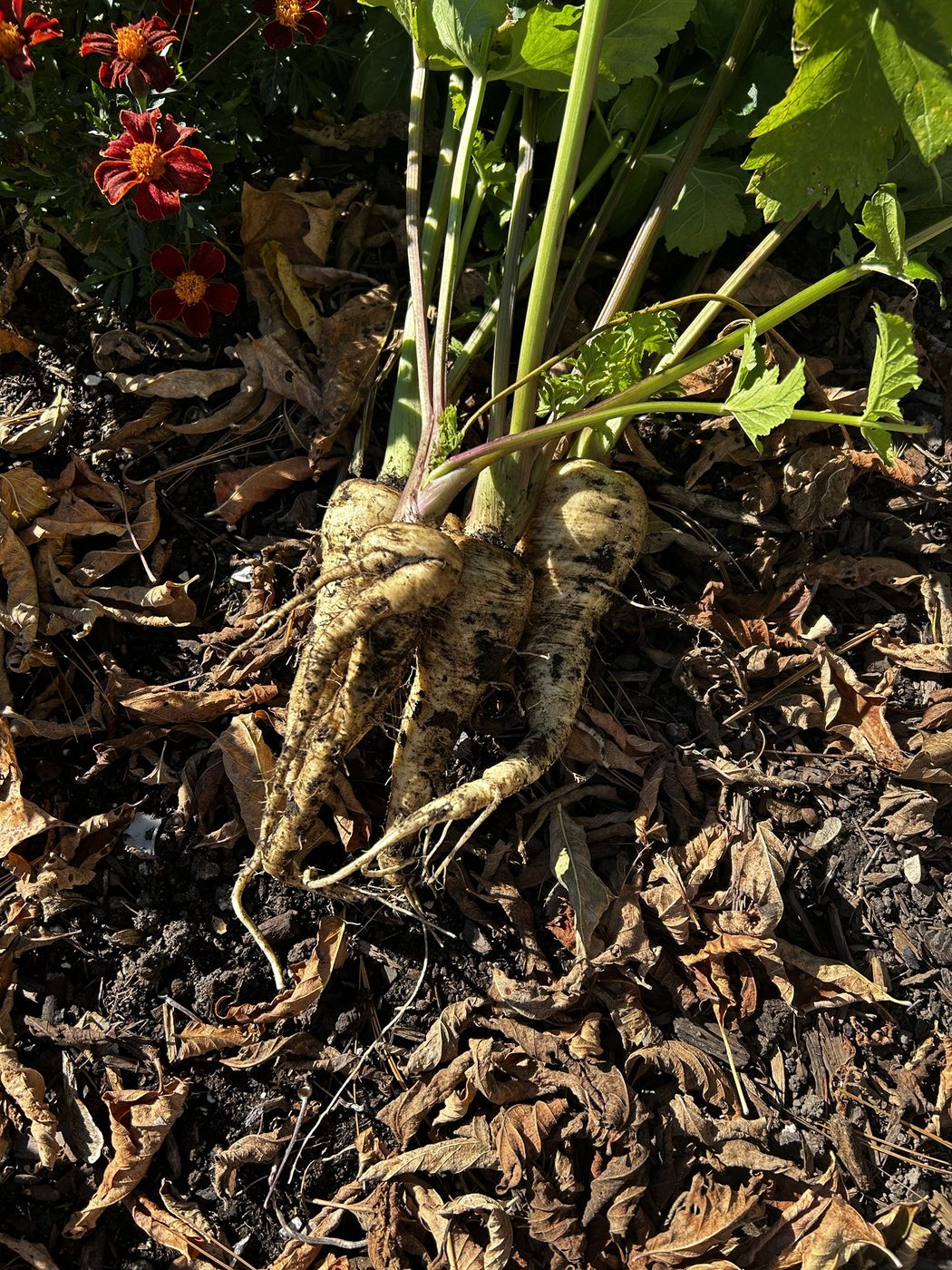
You can dig parsnips once the roots reach full size, but the flavour comes later. Illinois Extension explains that the starch in the root changes to sugar, and that the flavour is not fully developed until the roots have been "exposed to near-freezing temperatures for 2 to 4 weeks" in the fall and early winter.
If you have already dug some, University of Minnesota Extension's storage guide notes that "parsnip sweetens after two weeks of storage at 32 degrees Fahrenheit."
Leave them in the ground
You do not have to dig the whole row in fall. Illinois Extension says that if you leave parsnips in the soil over winter, "throw a few inches of soil or straw mulch over the crowns after the first fall frosts." Utah State Extension suggests mulching heavily with straw or compost to overwinter them. Dig what you need through winter whenever the ground allows, or wait for early spring, when Illinois says the roots are "especially tender and sweet."
Watch the other end of that window. Parsnips are biennial, and once the soil warms they start their second year. Minnesota Extension says that as the soil warms in spring, the plant sends up a flower stalk and "the parsnip will taste worse at this point." Illinois adds that roots lose flavour and turn fibrous if you do not dig them before new tops and seed stalks begin to grow. Lift everything left in the bed as soon as you see fresh green growth at the crown.
Why parsnips fork
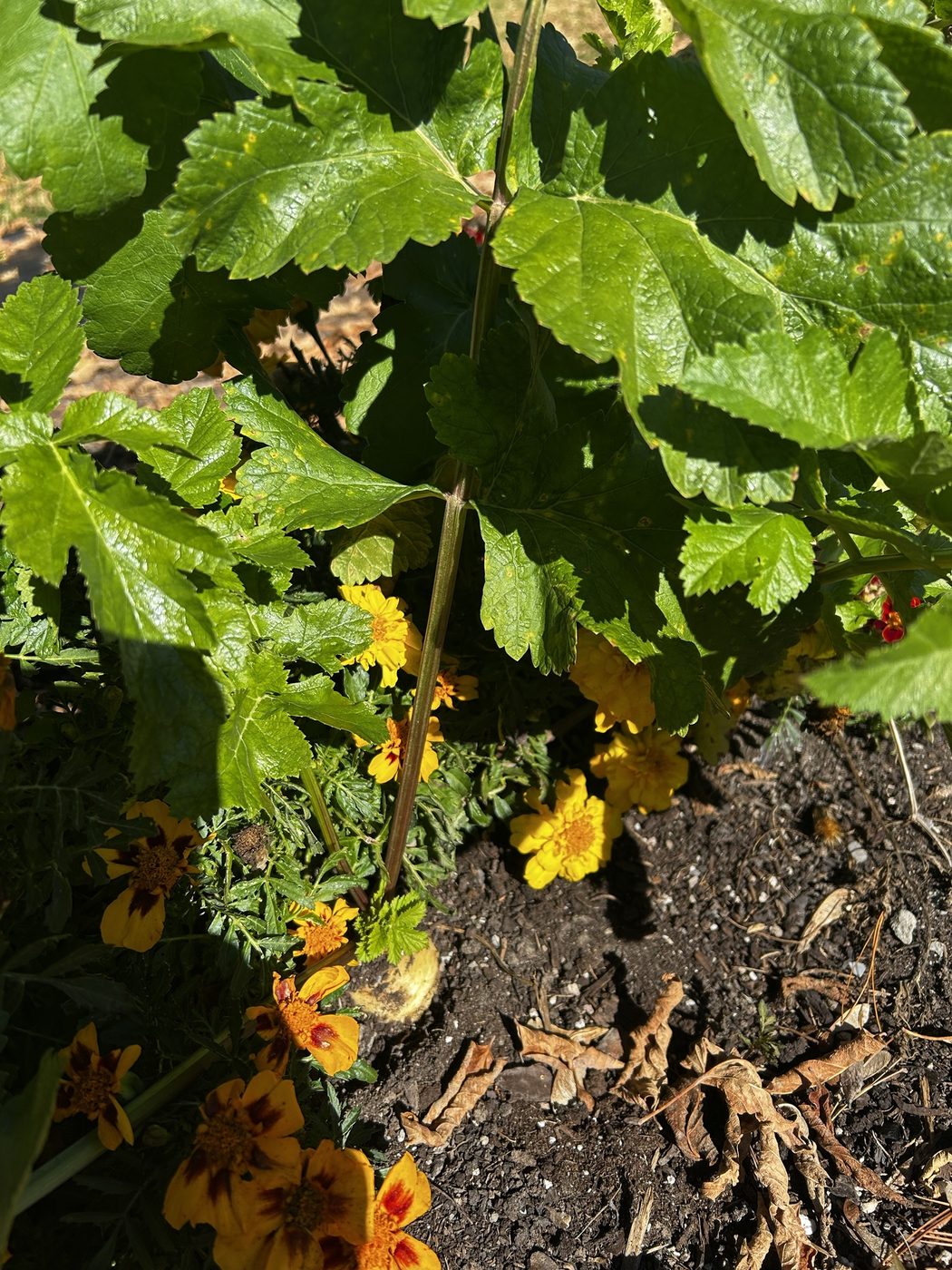
Forked and twisted roots are usually a soil story. The extension sources point to the same few causes:
- Rocks and hard soil. Minnesota says forked or split roots "may result from rocky, heavy, or compacted soil." Utah State says dense soils and obstructions such as rocks can deflect root growth.
- Fresh manure and clumps of organic matter. Illinois warns against fertilizing with fresh clumps of organic matter where parsnips will grow, because "this can cause misshapen or forked roots." In its root crop guide, Utah State lists fresh manure and excess nitrogen among the things that injure the root.
- A damaged taproot. Utah State explains that when the taproot is damaged, secondary roots grow and fill out, giving the forked look.
- Transplanting. Minnesota says transplanting "damages and misdirects their root growth." Parsnips are sown where they will grow.
- Too much water. Utah State notes that overwatering can produce hairy roots and forking.
For next year, Minnesota recommends sandy, loamy soil over heavy clay or silt, and Utah State suggests double digging heavy soil with plenty of compost. Loosen the bed deeply, pick out stones, and use well-rotted compost rather than fresh manure.
Storing parsnips you dig
Minnesota Extension puts parsnips in its "cold and moist" storage group, which it defines as 32 to 40 degrees F at about 95 percent relative humidity, with an expected shelf life of four months. It also says not to wax the roots or let them freeze. Utah State also suggests storing them in moist sand in a cool cellar, where they keep for several months.
Plan next year from your own first fall frost
For Brussels sprouts, the aim is to have the sprouts forming in cool weather. Arkansas says "fall planting is generally the best," and for a fall harvest it says to "transplant in early to midsummer, about the same time you would plant late cabbage." Plant too early and the sprouts form in late summer heat. Count back from your average first fall frost, then adjust for your variety, so the sprouts develop as the weather cools.
- Find the average first fall frost date for where you actually grow. Your zone alone will not give you this.
- Look up the days to maturity for your variety. Arkansas lists 90 to 95 days for the cultivars in its guide. Check whether the number counts from seeding or from transplanting, because the days-to-maturity clock starts at different points.
- Count back from your first frost. If your number counts from transplanting, that is roughly your transplant date. If it counts from seeding, that is your seeding date.
Two worked examples, using 95 days counted from transplanting:
- First fall frost around October 1: transplant around June 28.
- First fall frost around October 20: transplant around July 17.
Parsnips need a different kind of patience. Utah State says to sow two to three weeks before your last spring frost, and that roots are generally mature 100 to 120 days from seeding. They then sit through the first frosts of fall before you dig.
GrowSmart keeps this whole plan in one place. It plans spring, summer and fall planting dates and bed layouts for your city, with true plant spacing, companion planting with reasons, and crop rotation memory, so it can warn you before the same crop family goes back into the same spot next year. The free plan covers a spring garden of 10 plants in one bed with no account needed. Summer and fall planning, where a late-planted Brussels sprouts crop lives, are part of Pro. Grow your own groceries. Start your plan here.
Sources
- University of Arkansas Cooperative Extension Service, Home Gardening Series: Brussels Sprouts (FSA-6005): https://www.uaex.uada.edu/publications/PDF/FSA-6005.pdf
- University of Maryland Extension, Growing Brussels Sprouts in the Home Garden: https://extension.umd.edu/resource/growing-brussels-sprouts-home-garden
- Penn State Extension, York County Master Gardeners, Seed Planting Guide: https://extension.psu.edu/programs/master-gardener/counties/york/vegetable-guides/vegetable-seed-planting-guide/@@download/file/Vegetable-Seed-Planting-Guide.pdf
- Purdue Extension, Rosie Lerner, Cool-Season Brussels Sprouts Are Hot (2014): https://www.purdue.edu/hla/sites/yardandgarden/cool-season-brussels-sprouts-are-hot/
- University of Illinois Extension, Parsnip: https://extension.illinois.edu/gardening/parsnip
- University of Minnesota Extension, Growing Carrots and Parsnips in Home Gardens: https://extension.umn.edu/vegetables/growing-carrots-and-parsnips
- University of Minnesota Extension, Harvesting and Storing Home Garden Vegetables: https://extension.umn.edu/planting-and-growing-guides/harvesting-and-storing-home-garden-vegetables
- Utah State University Extension, Parsnips in the Garden: https://extension.usu.edu/yardandgarden/research/parsnips-in-the-garden
- Utah State University Extension, Root Crops: Physiological Problems: https://extension.usu.edu/vegetableguide/root-crops/physiological-problems