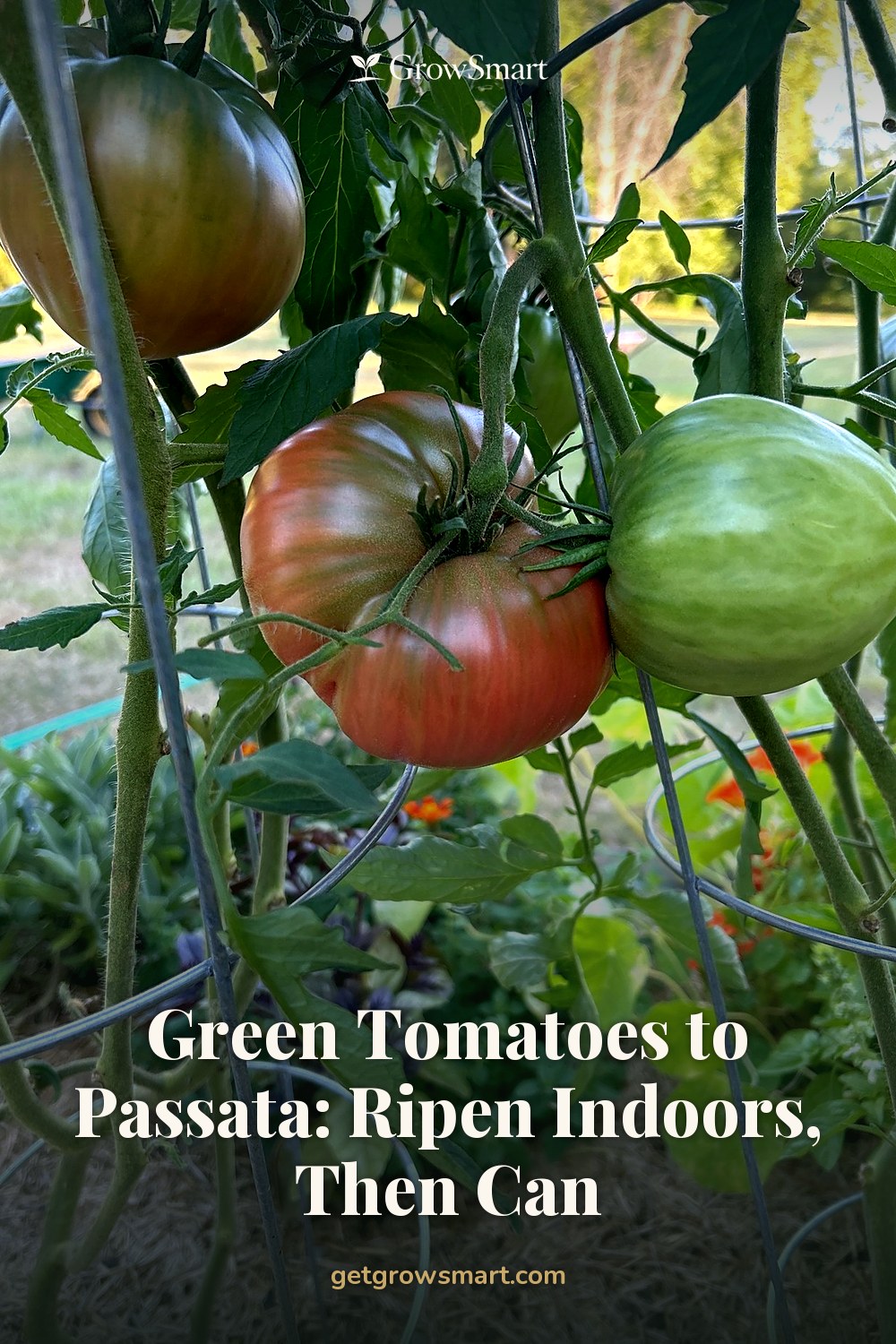
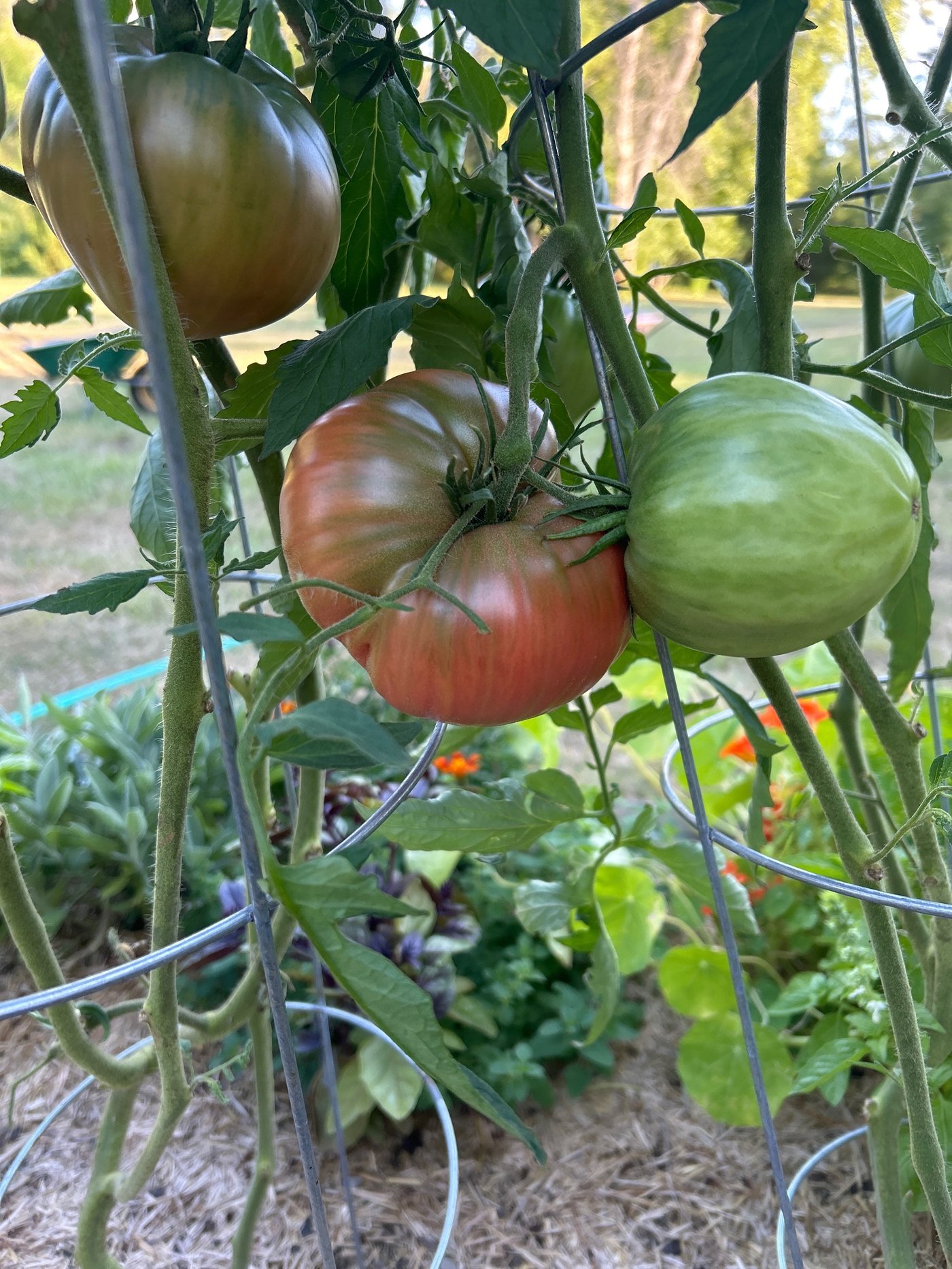
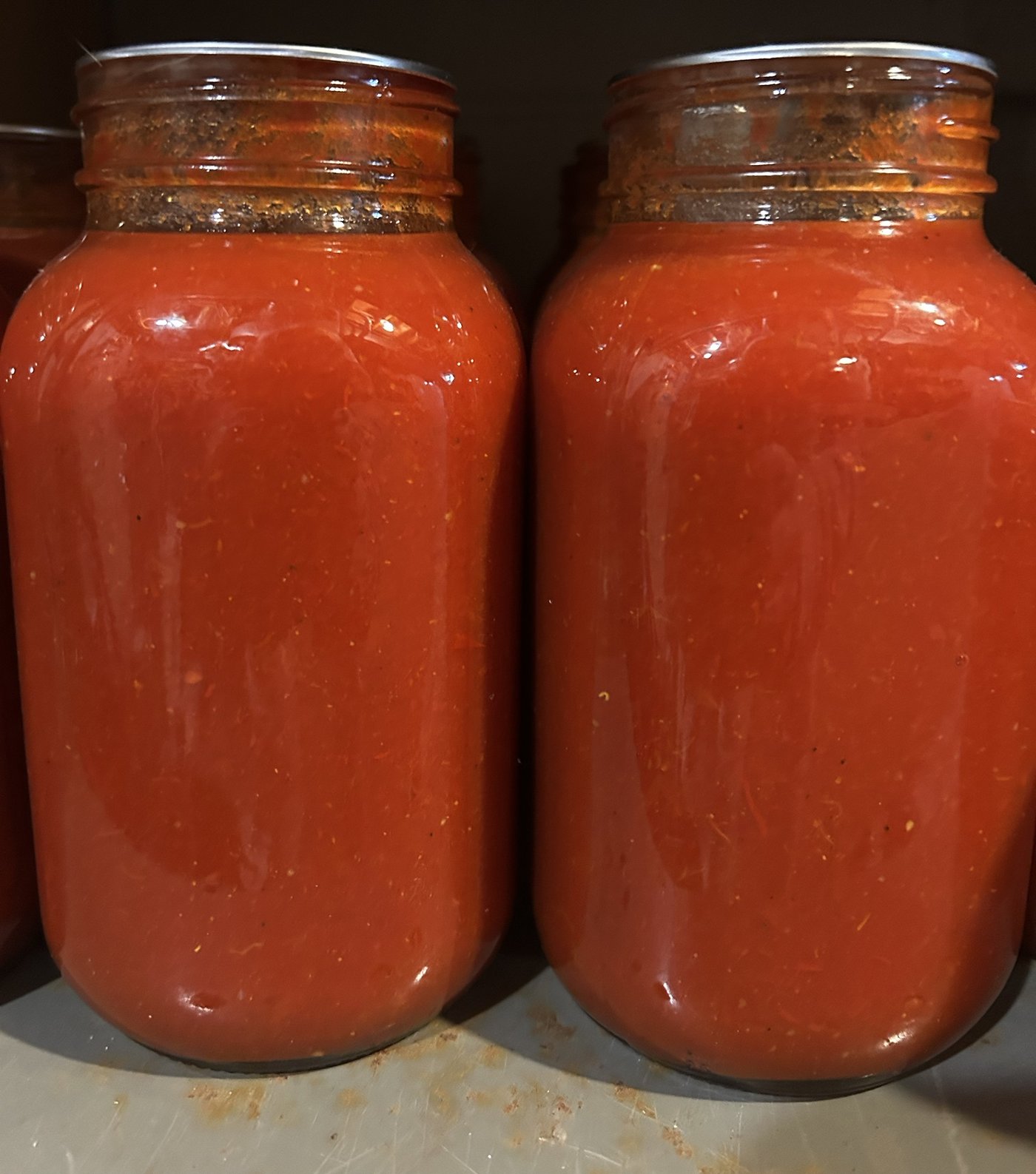
Before the first hard frost, I pulled every green tomato left in the garden and brought them inside. Over the next few weeks they ripened on the counter, went into the freezer as they turned red, and became my last batch of passata for the year.
Here is how to tell which green tomatoes will ripen, how to ripen them, and how to can them as passata with a tested method.
Which green tomatoes will ripen indoors
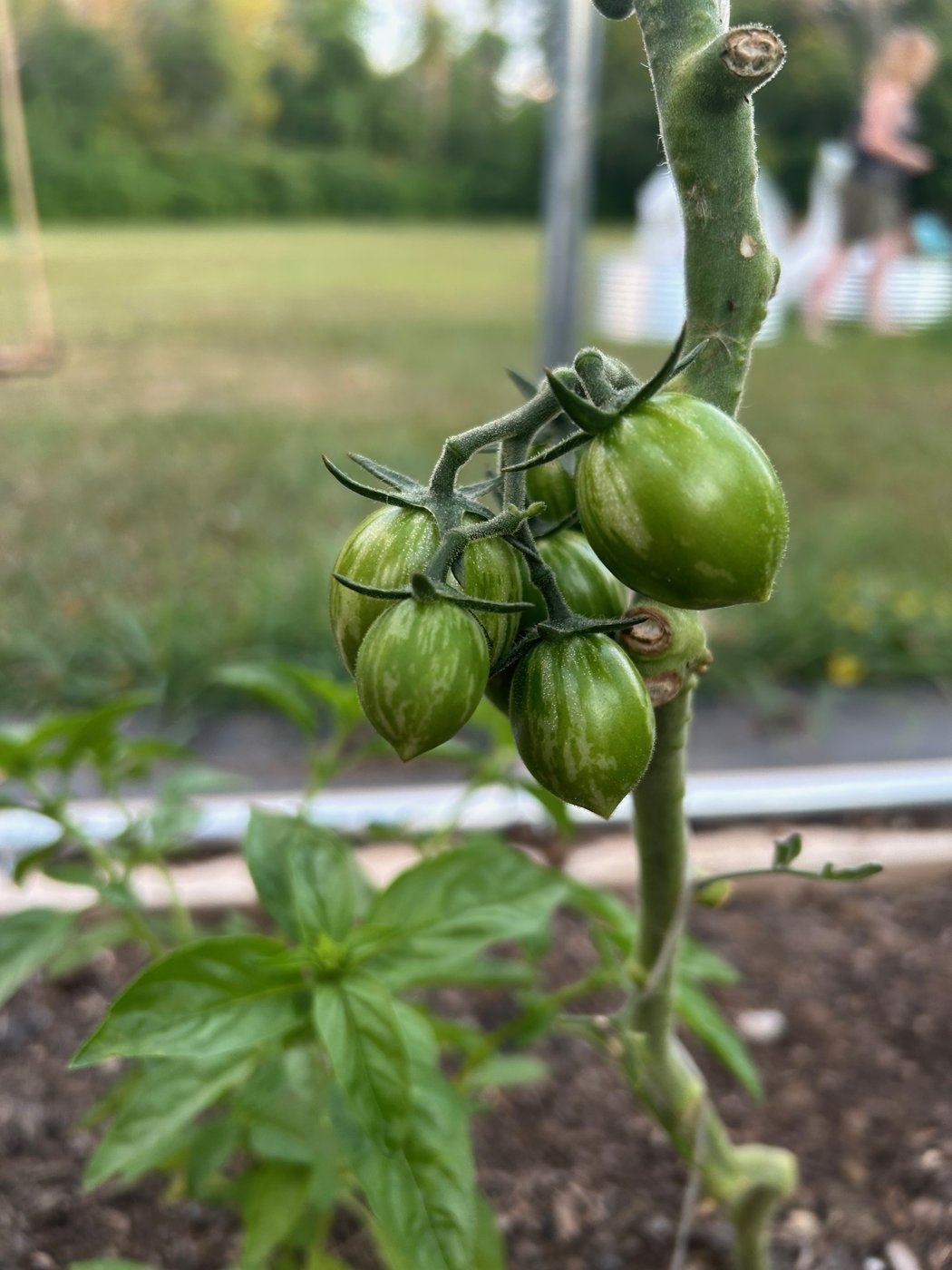
Not every green tomato will turn red off the vine. The ones that will are called mature green. Iowa State University Extension describes them as having "a glossy, whitish green fruit color and mature size." Colorado State University Extension says green fruit that is glossy and "at least three-fourths of normal size" can also be picked.
Pick those first. Iowa State also says to choose fruit free of disease, insect or mechanical damage.
Timing matters as much as size. Colorado State advises harvesting before a hard freeze or a run of frosty nights and ripening the fruit indoors. Tomatoes that freeze on the vine, or come from frost-killed vines, are also unsafe to can, which is covered below.
How to ripen green tomatoes indoors
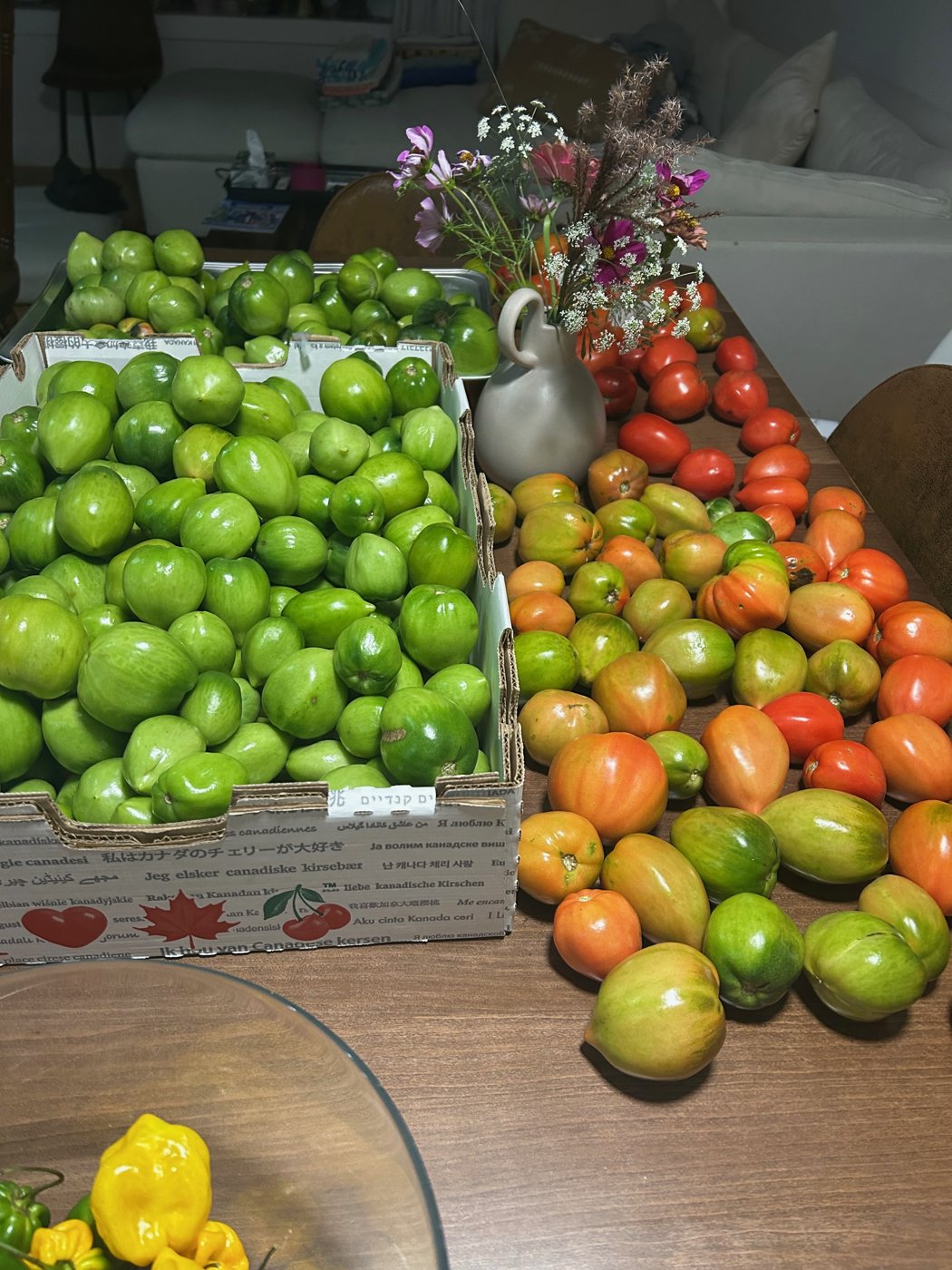
- Keep them warm, not hot. Iowa State says mature green fruit ripens in about two weeks at 65 to 70°F (18 to 21°C). It adds that cooler rooms, down to about 55°F (13°C), slow ripening and give poorer quality.
- Keep them out of direct sun. A sunny windowsill is not needed. Iowa State says a dark spot works too.
- Give them room. Iowa State suggests boxes 1 to 2 layers deep, or plastic bags with a few holes for air. Colorado State notes that some gardeners wrap each fruit in newspaper to keep it from shrivelling.
- Check them often. Take out ripe fruit, and throw out any tomato with soft spots or rot. Ripe tomatoes give off ethylene gas, which speeds ripening. Iowa State says that to speed things up, you can put a ripe tomato in the box or bag with the green ones.
- Watch the humidity. Iowa State says high humidity leads to mould and rot, and low humidity leads to shrivelling.
Freeze them as they ripen
Tomatoes ripened indoors do not all turn red on the same day. Freezing them whole as they ripen lets you wait until you have a full canner load. K-State Research and Extension food scientist Karen Blakeslee calls freezing tomatoes "a safe and convenient option" when you cannot can right away.
Two rules come with it:
- Frozen tomatoes are for cooked products. K-State says previously frozen tomatoes are best for sauces, juice or stewed products, not whole, halved or quartered tomatoes. The UC Master Food Preservers say they are not a fit for salsa either.
- Never can tomatoes that froze on the vine or came from frost-killed vines. The UC Master Food Preservers say tomatoes frozen on the vine are lower in acidity and unsafe for canning, and that tomatoes from frost-killed or dead vines "can be too low in acid to be safely canned." They also say not to can overripe tomatoes, including ones that were frozen. This is the other reason to pick before the frost, not after.
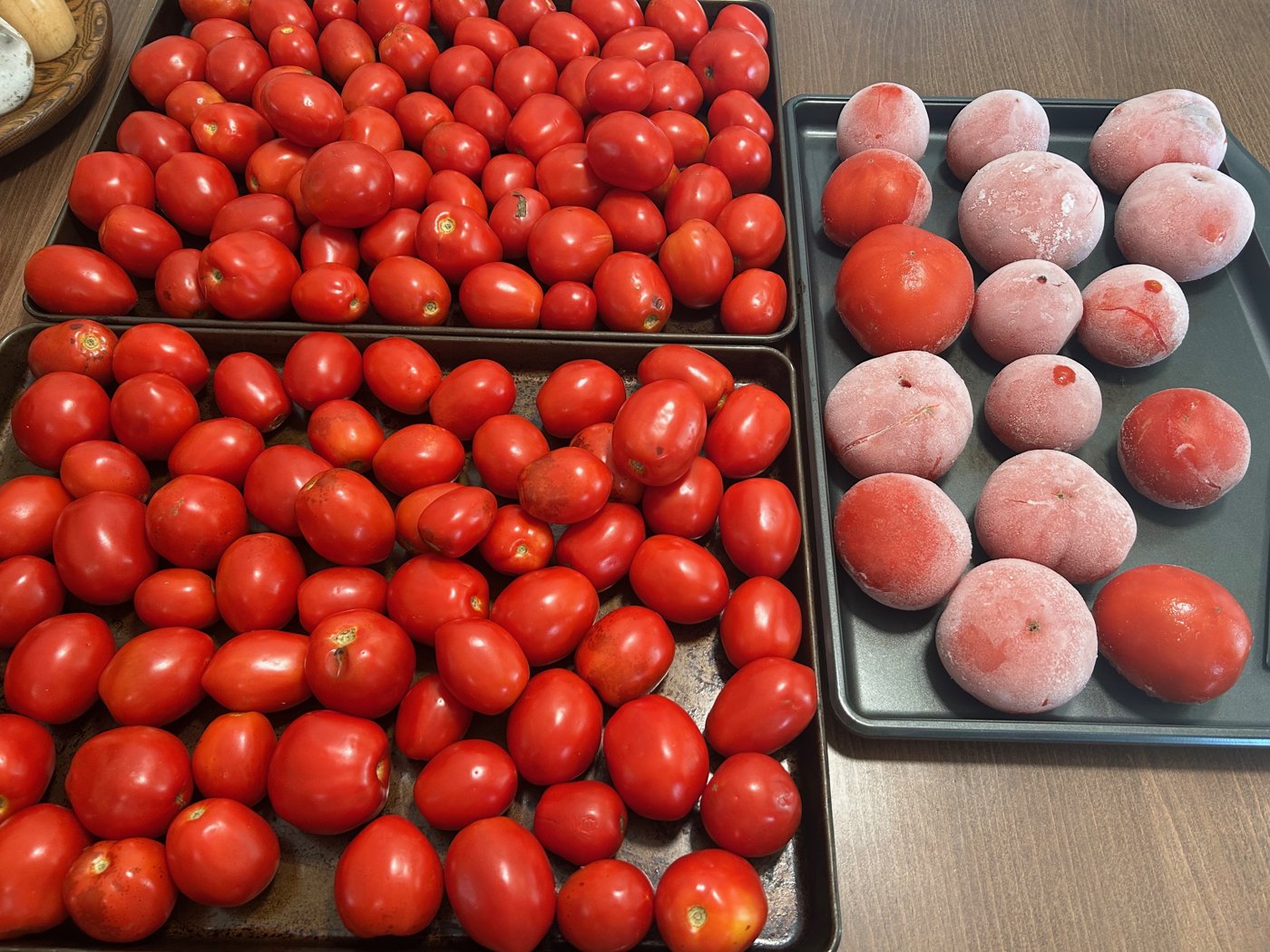
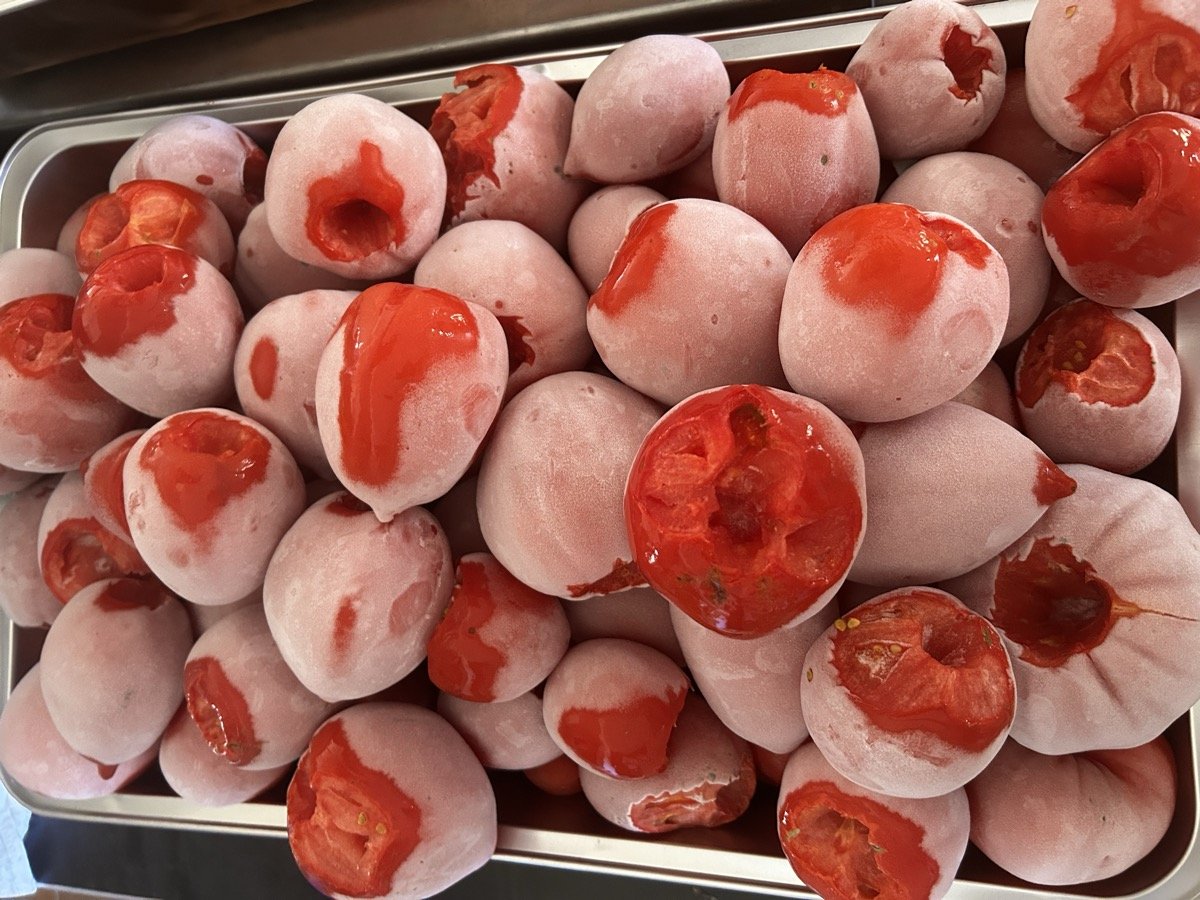
Thaw frozen tomatoes completely in the refrigerator before you start. As they thaw, the skins split and slip off easily, and the tomatoes release a lot of liquid. Do not drain it. The UC Master Food Preservers say to "use the entire tomato, including all of the thawed juices," so the liquid goes into the pot with the tomatoes. Cooking the sauce down takes care of the extra water.
How many tomatoes you need
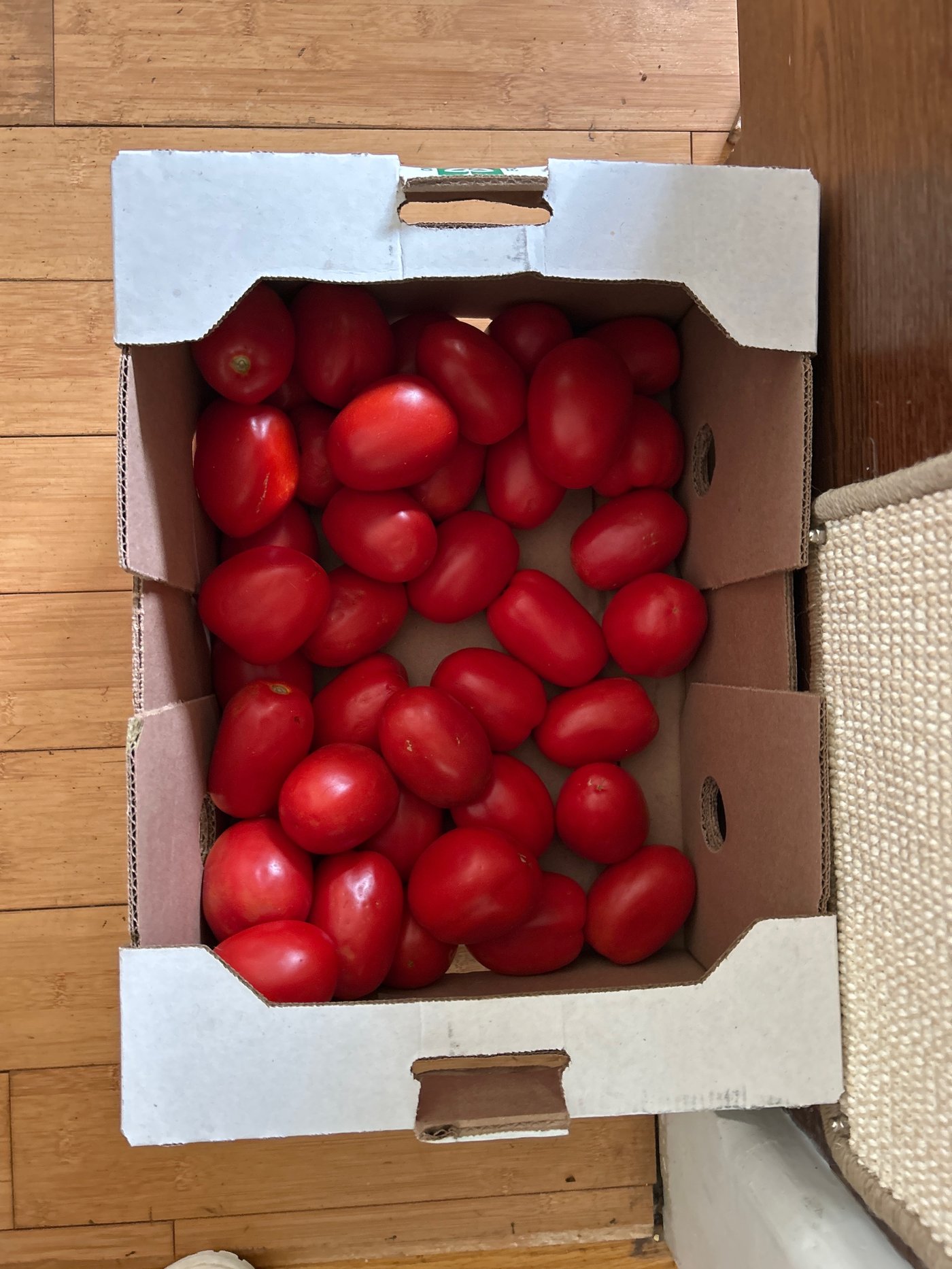
The National Center for Home Food Preservation (NCHFP) gives these amounts for tomato sauce:
- Thin sauce: about 5 pounds of tomatoes per quart. A canner load of 7 quarts needs about 35 pounds. A load of 9 pints needs about 21 pounds.
- Thick sauce: about 6½ pounds per quart. A load of 7 quarts needs about 46 pounds. A load of 9 pints needs about 28 pounds.
How to can passata with a tested method
Passata is a smooth, strained tomato purée. For shelf-stable jars, the method below is the NCHFP's tested standard tomato sauce, made smooth and strained. NCHFP's recipe is written for fresh tomatoes. K-State and the UC Master Food Preservers say previously frozen tomatoes suit well-cooked sauces like this one, so frozen tomatoes go through the same steps. Keep the steps, jar sizes and process times as written.
Prepare, heat and press. NCHFP's tomato sauce starts the same way as its tomato juice. Wash the tomatoes, remove the stems and trim off bruised or discoloured parts. Slice or quarter them into a large saucepan, then crush, heat and simmer for 5 minutes. Press the hot tomatoes through a food mill or sieve to remove the skins and seeds.
Cook it down. Simmer the strained tomatoes in a wide pot. NCHFP says to reduce the volume by about one-third for thin sauce, or by about half for thick sauce. Do not cook it down further into a paste; these process times are for sauce.
Add acid to every jar. NCHFP calls for added acid in canned tomatoes, and K-State notes it is required for both water-bath and pressure canning. Per jar:
- Pint: 1 tablespoon bottled lemon juice or ¼ teaspoon citric acid
- Quart: 2 tablespoons bottled lemon juice or ½ teaspoon citric acid
I use citric acid. NCHFP also allows 5% vinegar (2 tablespoons per pint, 4 per quart) but notes it may cause undesirable flavour changes. If the sauce tastes too sharp, NCHFP says you can add sugar, but do not leave out the acid.
Add salt if you like. Salt is optional. NCHFP lists 1 teaspoon per quart.
Fill the jars. Fill hot jars with the hot sauce, leaving ¼-inch headspace. Wipe the rims and put on the lids.
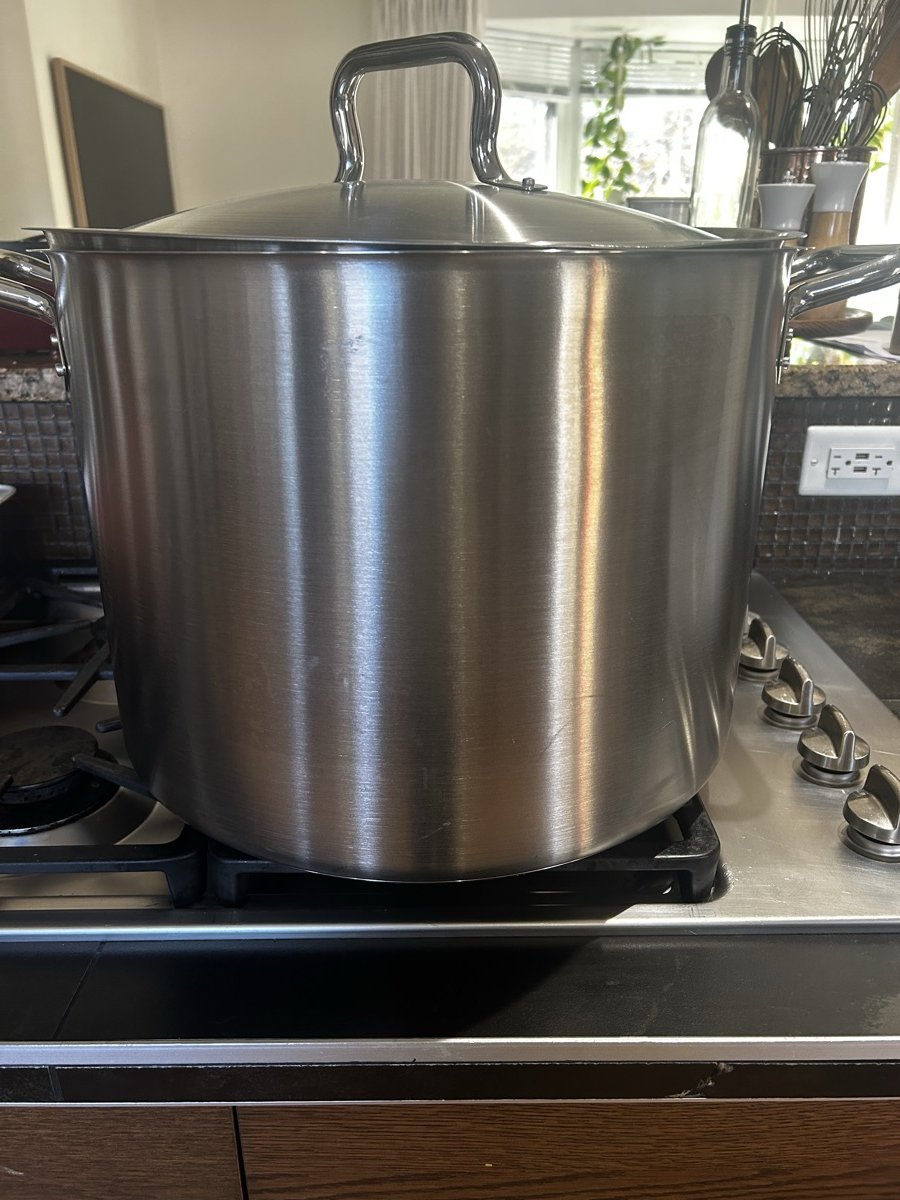
Process in a boiling water canner. Heat the canner water to about 180°F (82°C) for hot-packed jars, then set the jars on the rack. Keep the canner covered while it processes. NCHFP says that for process times over 30 minutes, the water should cover the jar tops by 2 inches. Start the timer only once the water is at a full boil, and keep it boiling the whole time. If it stops boiling, bring it back to a boil and start the time over. When the time is up, turn off the heat, take off the lid and wait 5 minutes before lifting out the jars. Let them cool undisturbed for 12 to 24 hours, then check the seals. Refrigerate and use any jar that did not seal. NCHFP's times for hot-packed tomato sauce:
| Elevation | Pints | Quarts |
|---|---|---|
| 0 to 1,000 ft | 35 min | 40 min |
| 1,001 to 3,000 ft | 40 min | 45 min |
| 3,001 to 6,000 ft | 45 min | 50 min |
| Above 6,000 ft | 50 min | 55 min |
Add fresh basil when you open the jar
Basil and tomatoes belong together, but fresh basil does not go into the jar with this tested sauce. Penn State Extension says that in a canning recipe, "the types and amounts of dried spices and herbs may be changed, but do not add extra fresh herbs." Stir fresh basil into the passata when you open the jar and heat it.
Plan next year so more tomatoes ripen on the vine
The best answer to a counter full of green tomatoes is a longer ripe harvest outside. That comes down to two dates: when your tomatoes go in, and your average first fall frost.
- Find your average first fall frost date for where you grow.
- Look up the days to maturity for your variety. Check whether the number counts from seeding or from transplanting, because the days-to-maturity clock starts at different points.
- Count forward from your planting date to your first ripe fruit, then see how many weeks are left before frost.
A worked example: an 80-day tomato transplanted on June 1 should give its first ripe fruit around August 20. With a first fall frost around October 1, that leaves about six weeks of ripe harvest. Then pick the mature green fruit before the frost and ripen it indoors.
GrowSmart keeps this plan in one place. It plans spring, summer and fall planting dates and bed layouts for your city, with true plant spacing, companion planting with reasons, and crop rotation memory, so it can warn you before tomatoes or another crop from the same family go back into the same spot next year. The free plan covers a spring garden of 10 plants in one bed with no account needed, and every season you save is kept in History. The rotation check itself is part of Pro. Grow your own groceries. Start your plan here.
Sources
- Iowa State University Extension and Outreach, Ripening Tomatoes and Green Peppers Indoors: https://blogs.extension.iastate.edu/answerline/2013/09/30/ripening-tomatoes-and-green-peppers-indoors/
- Colorado State University Extension, PlantTalk Colorado, Harvesting and Ripening Tomatoes (1832): https://planttalk.colostate.edu/?p=2472
- K-State Research and Extension, K-State food scientist shares tips on canning frozen tomatoes safely (Sept. 29, 2025): https://extension.k-state.edu/news-and-publications/news/stories/2025/09/food-science-canning-frozen-tomatoes.html
- UC Master Food Preservers, Preserve it! Series: How to Safely Can Previously Frozen Tomatoes: https://ucanr.edu/node/167602
- UC Master Food Preservers, Preserve it! Series: Don't Can Tomatoes from Frost-Killed Vines: https://ucanr.edu/node/167601
- National Center for Home Food Preservation, Standard Tomato Sauce: https://nchfp.uga.edu/how/can/how-do-i-can-tomatoes/standard-tomato-sauce/
- National Center for Home Food Preservation, Tomato Juice: https://nchfp.uga.edu/how/can/how-do-i-can-tomatoes/tomato-juice/
- National Center for Home Food Preservation, Tomato Acidification Directions: https://nchfp.uga.edu/how/can/how-do-i-can-tomatoes/tomato-acidification-directions/
- National Center for Home Food Preservation, Using Boiling Water Canners: https://nchfp.uga.edu/how/can/general-information/using-boiling-water-canners/
- Penn State Extension, What Can You Change in a Canning Recipe?: https://extension.psu.edu/what-can-you-change-in-a-canning-recipe