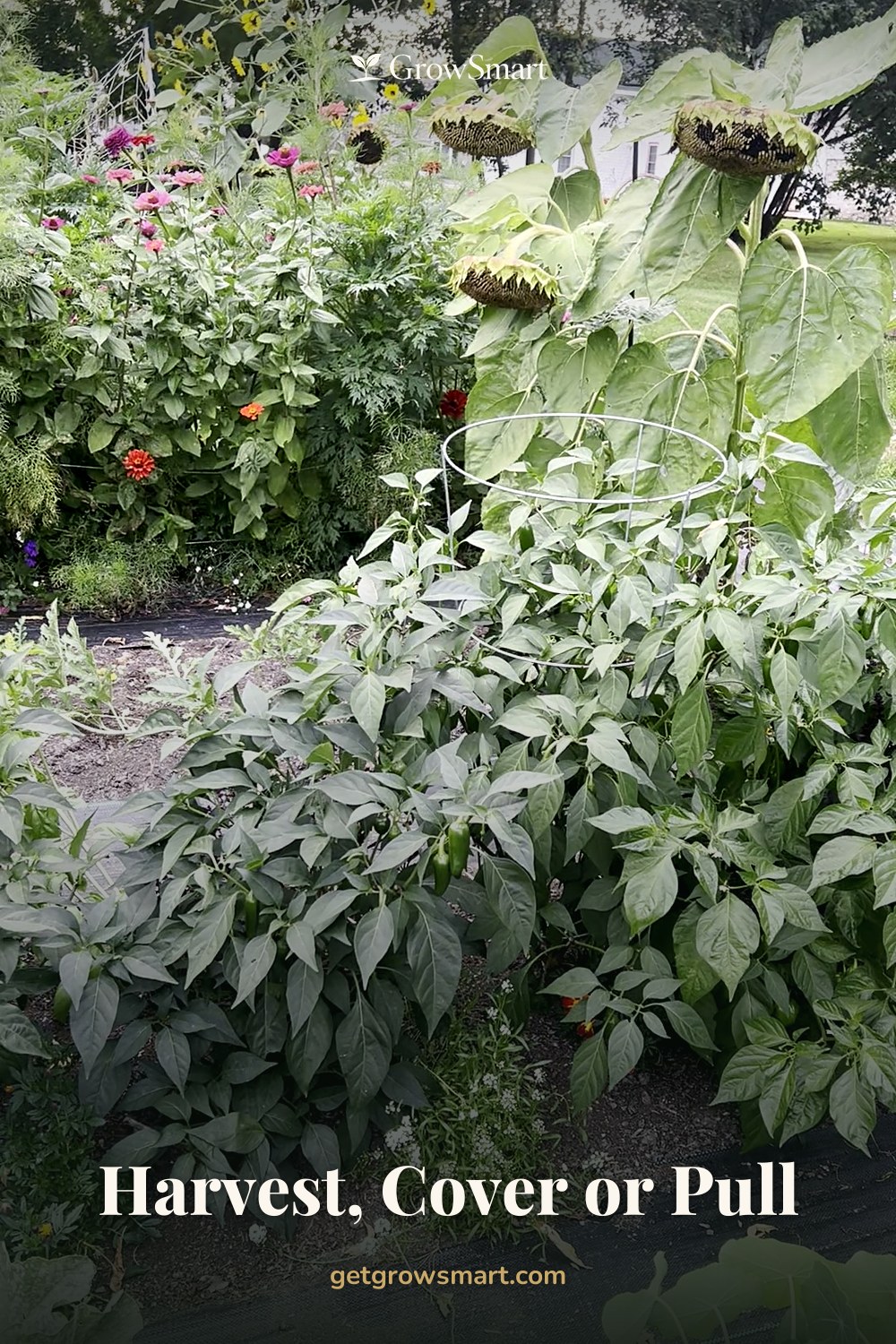
A vegetable garden two weeks out from its first frost holds three futures in one bed. Some plants are finished and have not been told yet. Some will keep producing for weeks if you give them a few degrees on the wrong nights. Some are better left alone, because the cold will improve them.
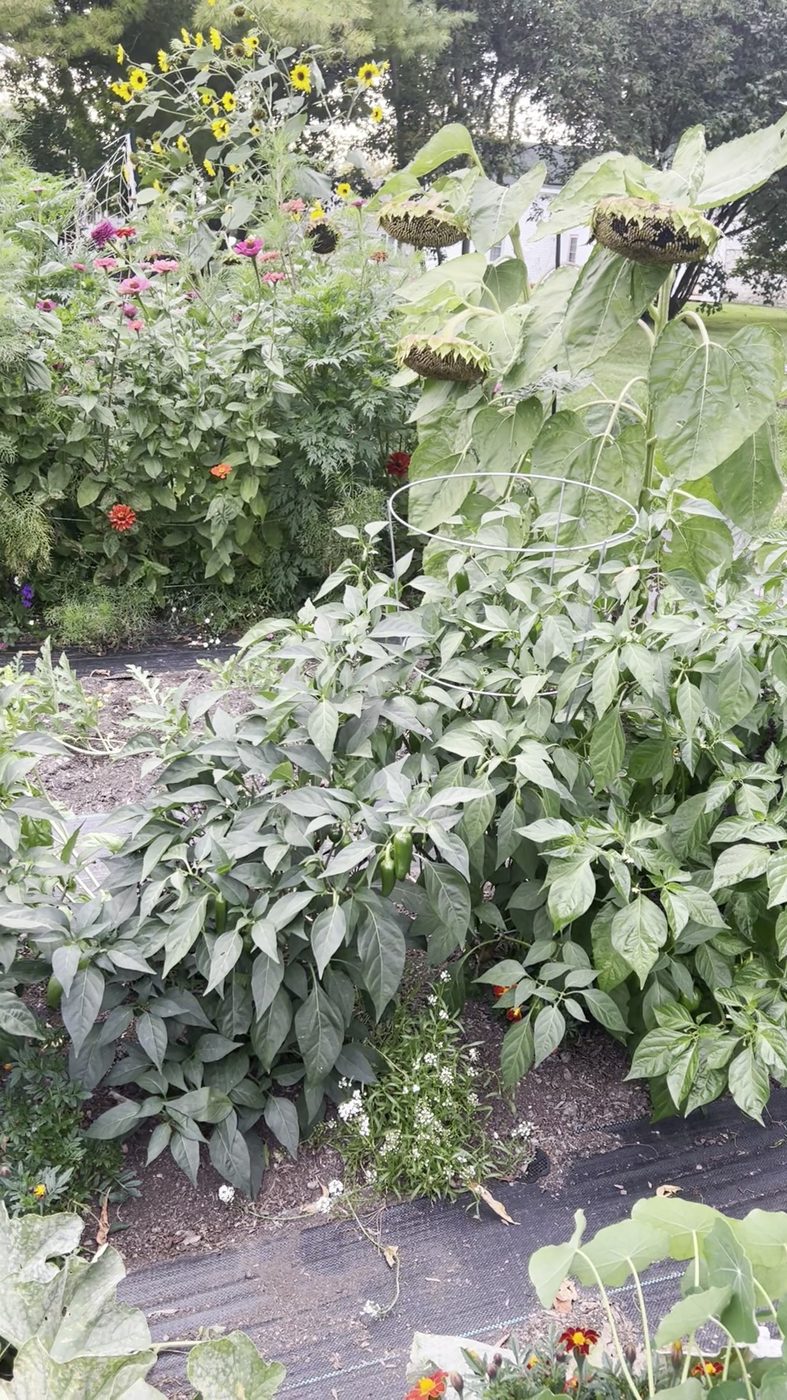
The first frost is not one deadline for everything. It is a sorting event, and the sorting can be done on paper two weeks early, not at nine at night.
Frost is not one event
NOAA's freeze climatology splits cold nights into three bands. A light freeze, 29 to 32°F, kills tender plants and leaves other vegetation largely alone. A moderate freeze, 25 to 28°F, is widely destructive. A severe freeze, 24°F and below, does heavy damage and freezes the ground solid. The National Weather Service uses hard freeze separately, for 28°F or lower sustained for an extended period.
How the cold arrives matters. A radiational frost forms on a calm, clear night, as heat radiates from plant and soil into an open sky. An advective freeze is a cold air mass moving in, usually with winds above about 5 mph. Covers trap heat radiating out of the soil, so they work against the first kind and much less against the second.
There is a floor. Iowa State Extension states it plainly: below about 28°F, covering is typically no longer effective, and damage can occur above 28°F when the freeze runs five hours or longer. Above that line you cover, below it you harvest.
Which vegetables survive frost, and which do not
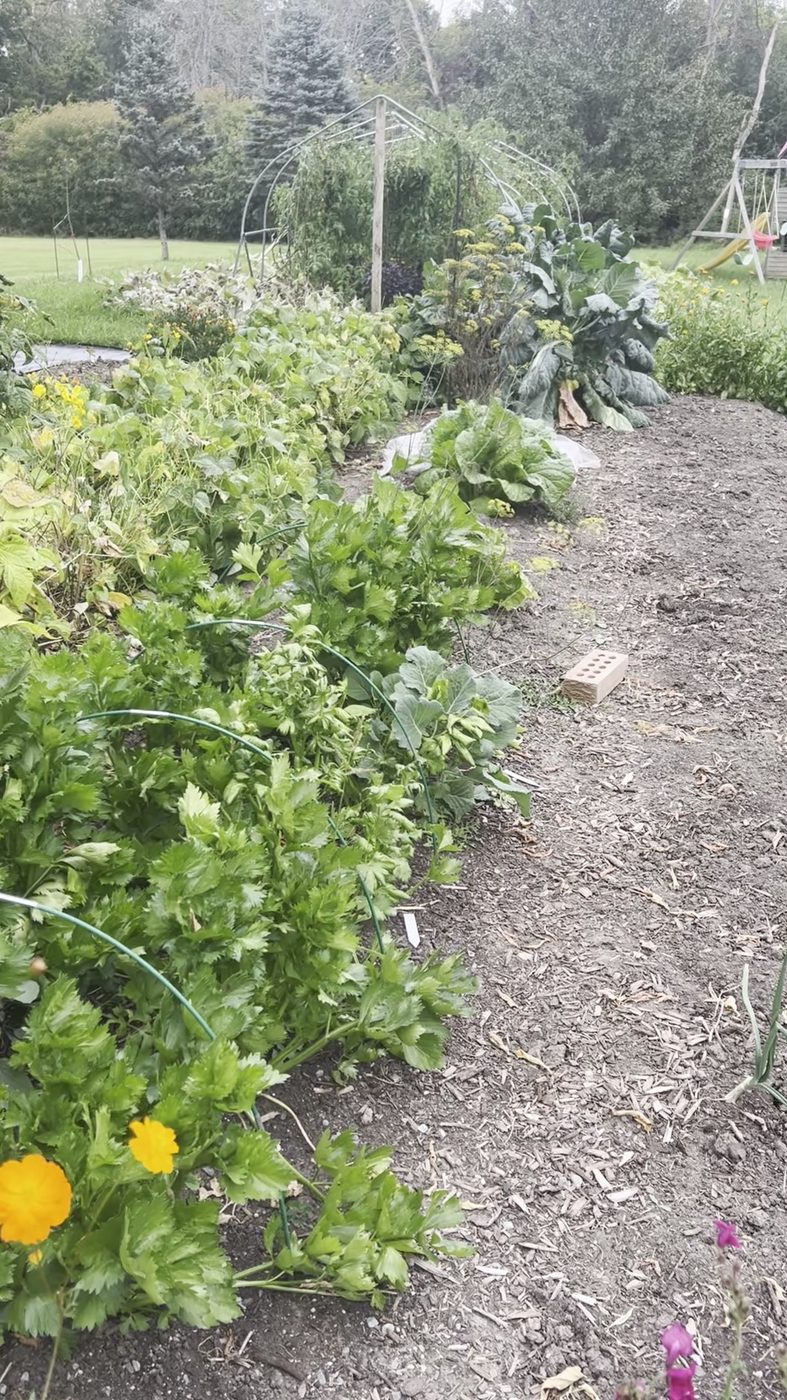
Two weeks before your average first frost, walk the garden and sort every crop into one of three groups. SDSU Extension bands most common vegetables like this, though celery is not on their list and sits at the tender end of the cover group.
| Group | Crops | What it means |
|---|---|---|
| Harvest now | Basil, peppers, eggplant, tomatoes, cucumbers, summer squash, melons, beans, sweet corn, potatoes (dig after the vines die, not before), sweet potatoes | Not cold tolerant. Bring them in before even a light frost. Covering only postpones the problem. |
| Cover | Lettuce, chard, beets, carrots, spinach, parsley, radish, peas, celery | Withstand a light freeze. SDSU puts that band at 28 to 32°F, slightly wider than the NOAA definition above. A few degrees turns one more night into several more weeks. |
| Leave alone | Cabbage, napa cabbage, kale, kohlrabi, turnip, broccoli | These brassicas tolerate a moderate freeze of 24 to 28°F. Nebraska Extension puts it well: there is no need to rush to cover or harvest them when frost threatens. |
A fourth group is worth the wait. Parsnips and Brussels sprouts are best left until after several moderate freezes. Illinois Extension is specific about parsnips: the flavour is not fully developed until the roots have had two to four weeks of near freezing temperatures, as starch converts to sugar.
Be careful with the folklore, though. Frost sweetening is well supported for parsnips, rutabagas and Brussels sprouts, but for kale and collards it is repeated far more often than measured. What holds there is simpler: cooler weather improves flavour until freezing stops growth. The services also disagree at the margins. SDSU lists cauliflower twice, as light frost tolerant and as frost hardy to about 26°F, and lettuce, spinach and broccoli move between groups. Use the table as a starting point, and let your own notes beat it.
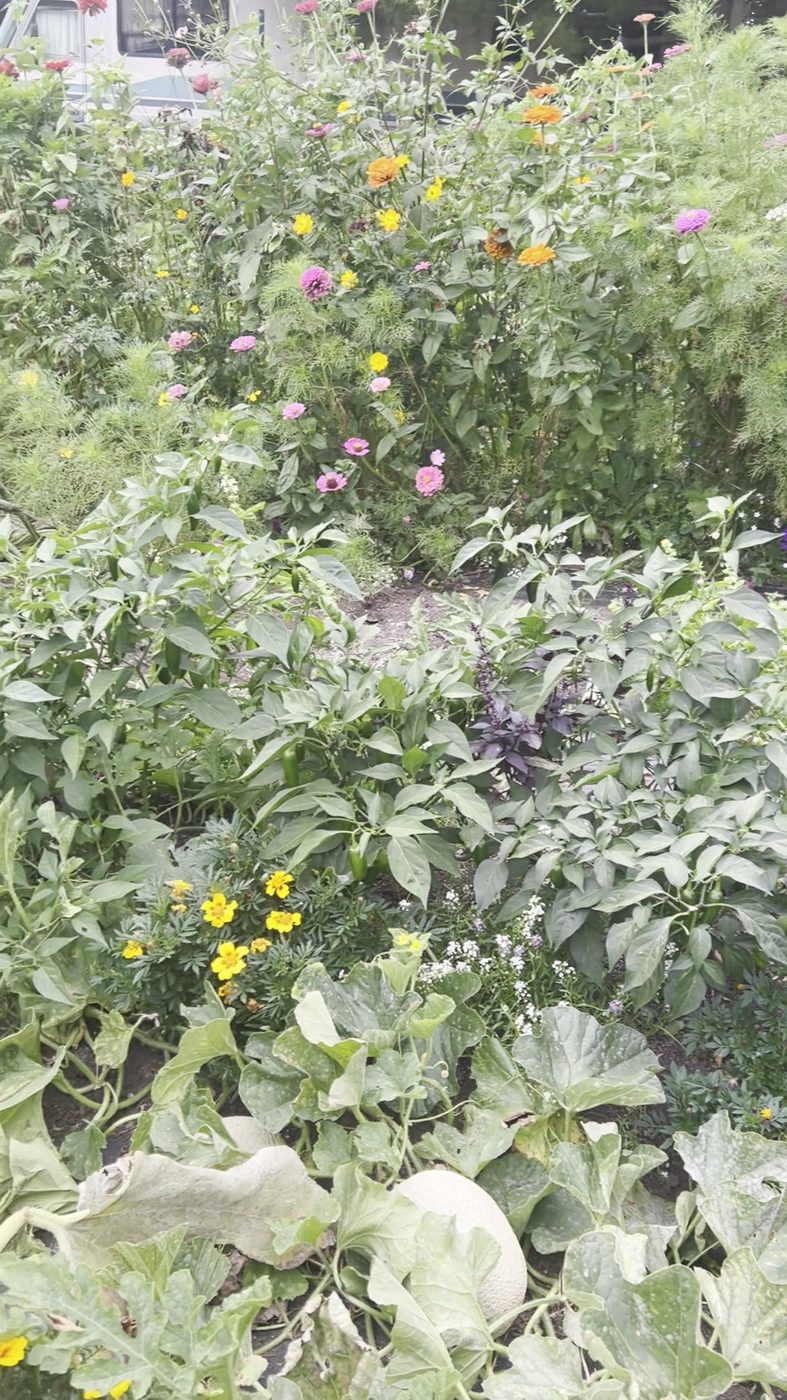
Harvest: what finishes indoors and what does not
Picking ahead of a frost is half the job. Knowing which fruit finishes on a shelf is the other half.
Tomatoes will finish, if they are mature green. Colorado State looks for shiny green skin with a white to light green star at the blossom end. The surer check is internal: slice one, and if the pulp around the seeds has gone jelly like and the seeds slip aside rather than being cut, the rest of that size will ripen. Hold them at 55 to 70°F, about two weeks near 70°F and a month near 55°F. Below 50°F they turn bland, and no light is needed.
Peppers mostly will not. They are nonclimacteric and produce very little ethylene, so one picked fully green tends to stay green. University of Maryland Extension states it flatly: they do not ripen further after harvesting. Peppers already starting to colour will keep colouring held warm, around 68 to 77°F, at high humidity. Otherwise store them at 45 to 50°F, where Maryland puts shelf life at two to three weeks.
Basil never gets as far as frost. Illinois Extension notes that cold can damage basil and blacken the leaves at 50°F. Cut it when the forecast first shows a night in the low 50s, and keep it out of the fridge. Cucumbers and eggplant are injured below 50°F too, cucumbers in as little as one to three days.
Winter squash for storage comes in before the frost. Frost damages the rind and shortens storage life, and a frosted squash is better cooked or frozen within a day or two. They can also be injured at 50 to 55°F with no frost at all. More in how to cure and store winter squash and potatoes.
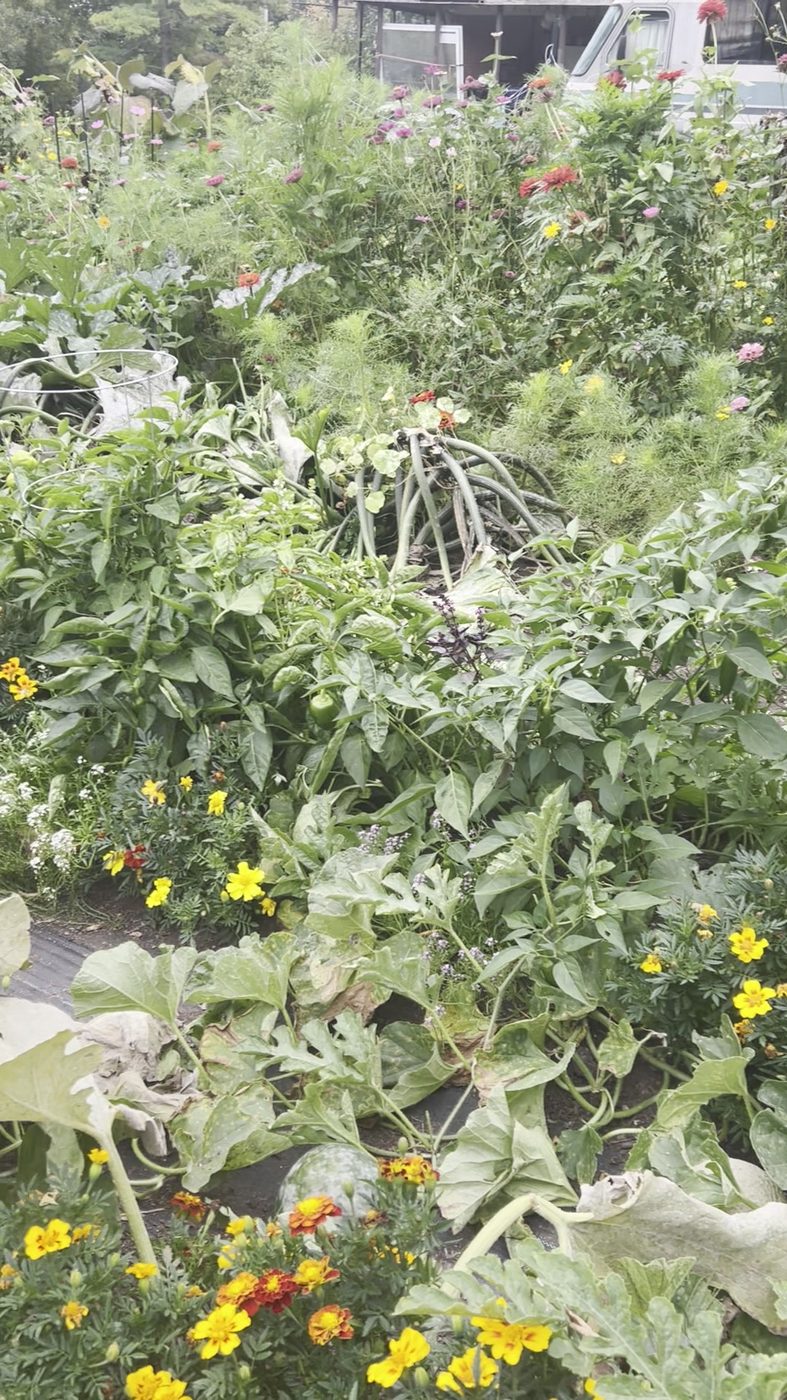
Cover: what row cover actually buys you
Row cover is sold by fabric weight, and University of Maryland Extension maps it cleanly: 0.45 ounces per square yard gives about 2°F of protection, 0.5 to 1.0 ounces gives 4 to 6°F, and 1.5 to 2.2 ounces gives up to 8°F. Heavier fabric also blocks more light.
Four things decide whether you get those degrees.
The cover has to reach the ground. The heat comes from the soil, not the plant. Colorado State puts it in one sentence: soil, warmed by the sun in the daytime, is the source of heat for frost protection at night. A cover draped like a scarf vents it away.
Water the bed that afternoon. Colorado State notes moist soil absorbs more heat, and it gives that back slowly overnight, the cheapest couple of degrees on offer.
Hoops matter. Foliage pressed against the fabric freezes at the contact points, and on windy nights the fabric abrades stems. Colorado State sets hoops at three to five foot intervals, closer on exposed sites.
It goes on in the late afternoon, while the day's heat is still in the soil rather than after dark once the ground has given it back, and comes off in the morning so the soil recharges. Keep it dry: a wet sheet cools by evaporation and can leave plants colder than nothing.
The same fabric protects better in fall than in spring, because the soil holds a larger reservoir of heat, an advantage that fades as the ground cools.
Pull: the cleanup that actually pays
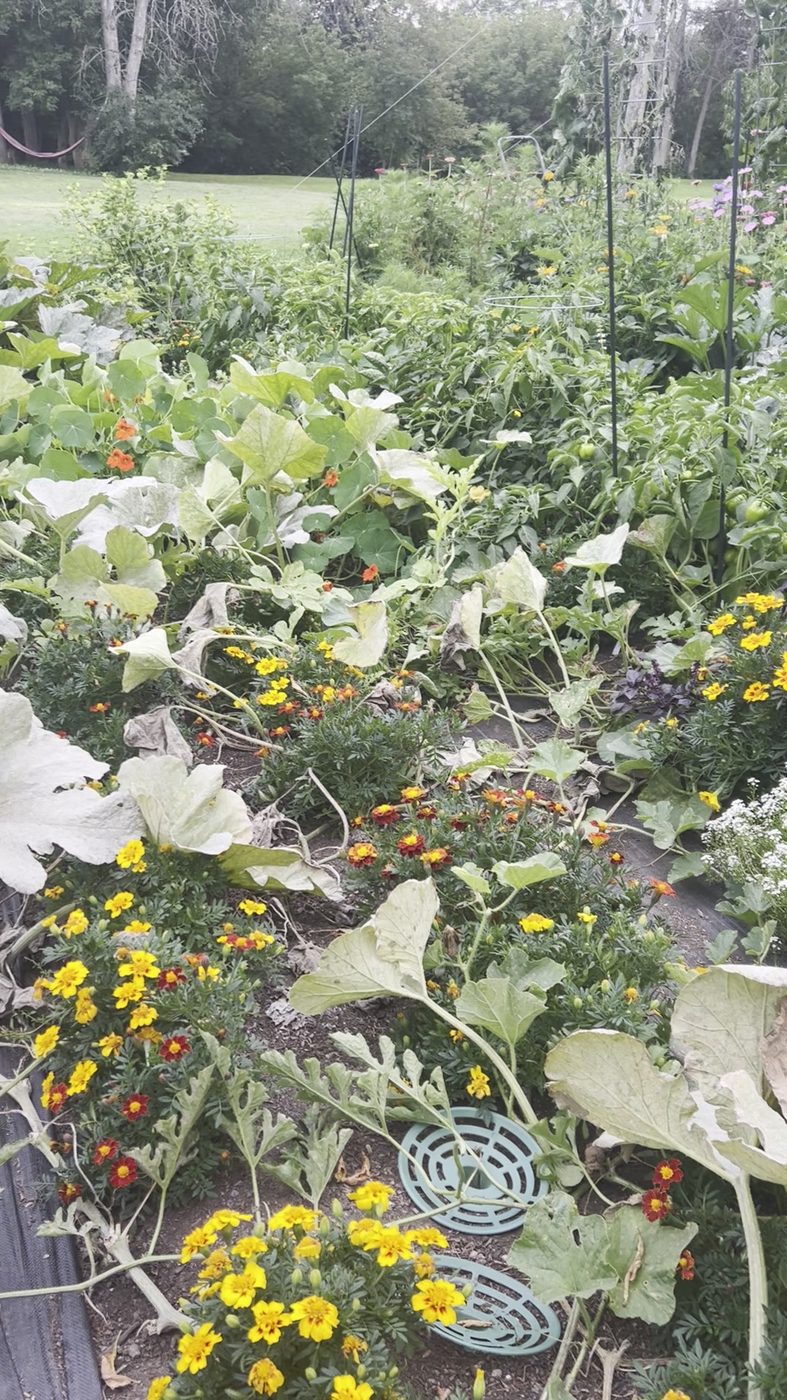
Here is the part usually taught wrong. Clearing mildewed squash and melon vines does much less for next year's powdery mildew than most gardeners assume. Rutgers describes the fungus as an obligate parasite that dies out in northern regions when the crop freezes, and UMass puts the Northeast's starting inoculum down to airborne spores from southern states. Cornell is more careful: the fungi cannot survive without a living host except as chasmothecia, the overwintering stage, found every year anyone looked for them in New York since 1989, and it says the sources of initial inoculum are not definitively determined. Treat local carryover as possible rather than the main event.
That does not make the cleanup pointless. It changes the reason. Powdery mildew strips the canopy, and the canopy feeds and shades the fruit. University of Vermont Extension links that defoliation to sunburned fruit, premature ripening, poor rind colour, shrivelled handles and winter squash that keeps less well.
The debris is worth clearing for a different set of pests. Squash vine borer overwinters in the soil as a larva or pupa, and clearing vines after harvest stops any still inside the stems from finishing development. Squash bugs overwinter as adults under plant residue. Tomato early blight and Septoria leaf spot overwinter on infected debris, which is why extension pairs clearing it with a three to four year rotation away from tomatoes and potatoes.
Put the dates in the plan, not in your head
One correction first: a USDA hardiness zone describes average annual extreme winter lows, not your frost dates. Two gardeners in the same zone can sit two weeks apart, and elevation, slope and nearby water shift it.
So work from your own date: count back 14 days for the sorting walk and 7 days for the tender harvest.
- First frost around September 28: sort September 14, tender crops in by September 21.
- First frost around October 20: sort October 6, tender crops in by October 13.
- First frost around November 12: sort October 29, tender crops in by November 5.
None of that is hard to work out. It is hard to remember mid season, which is the actual failure.
That is the gap GrowSmart closes. It plans spring, summer and fall against both of your frost dates, so sowing windows, succession intervals and harvest deadlines sit in one schedule. It works offline, and the free plan covers a spring garden of 10 plants with no account needed.
Then the first cold night stops being a scramble. You already know what is coming in, what is covered, and what is out there getting better.
Sources
- NOAA National Weather Service, Freeze Data (light, moderate and severe freeze definitions)
- NOAA National Weather Service Glossary, Hard Freeze
- UF/IFAS Extension, Cold Protection of Landscape Plants (radiational versus advective freezes)
- Penn State Extension, Frost, Critical Temperatures, and Frost Protection
- Iowa State University Extension, How to Protect Plants from Frost and Freeze
- SDSU Extension, Fall Frost Tolerance of Common Vegetables
- Nebraska Extension in Lancaster County, Frost and Cold Temperatures Bring an End to the Gardening Season
- Illinois Extension, Parsnip
- University of Minnesota Extension, Growing Collards and Kale
- University of Maryland Extension, Row Covers
- Colorado State University Extension, CMG GardenNotes #722, Frost Protection and Extending the Growing Season
- NC State Extension, Season Extension: Introduction and Basic Principles
- Colorado State University Extension, Ripening Tomatoes Indoors
- University of Alaska Fairbanks Cooperative Extension Service, A Harvest of Green Tomatoes
- UC Davis Postharvest Technology Center, Bell Pepper
- University of Maryland Extension, Growing Peppers in a Home Garden
- Illinois Extension, Basil
- UC Davis Postharvest Technology Center, Cucumber
- UC Davis Postharvest Technology Center, Pumpkin and Winter Squash
- Rutgers NJAES Plant and Pest Advisory, Cucurbit Powdery Mildew Control
- Cornell Vegetables, Cucurbit Powdery Mildew
- UMass Extension Vegetable Program, Cucurbits, Powdery Mildew
- University of Vermont Extension, Powdery Mildew Management on Organic Cucurbits
- UW-Madison Extension, Squash Vine Borer
- Utah State University IPM, Managing Pests With Fall Garden Clean-Up
- Iowa State University Extension, Septoria Leaf Spot
- USDA Agricultural Research Service, Plant Hardiness Zone Map