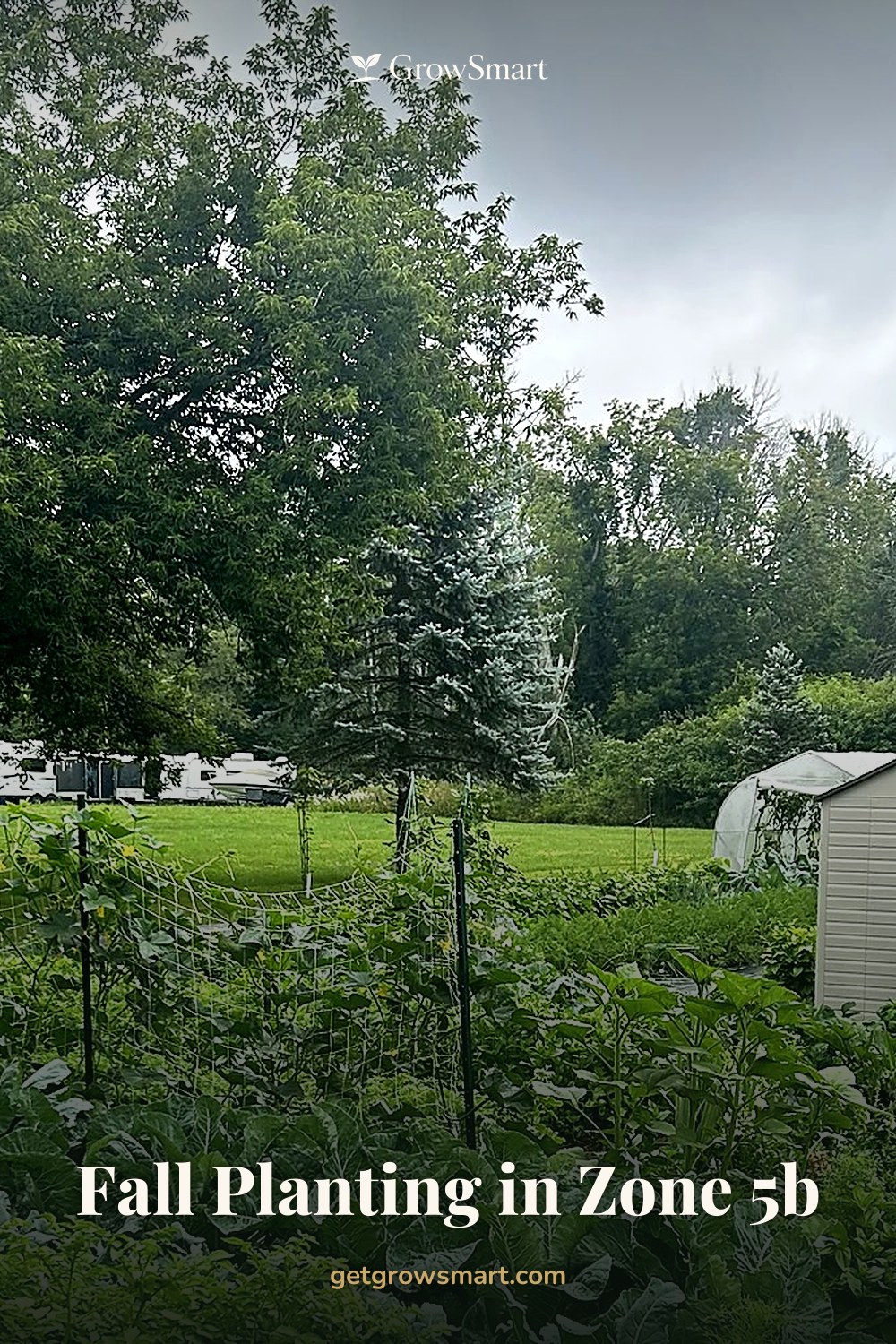
Late August feels like the end of the season. It isn't. In Zone 5b your first frost is still about six weeks away, usually the first or second week of October, and six weeks is enough time for a real second harvest if you plant the right things now.
It all comes down to one number
The whole decision comes down to one number: your first frost date. Everything else is subtraction. Take that date, count backward by a crop's days to maturity, add a short buffer because growth slows as the days shorten, and if it still fits, you can plant it. A radish that matures in 25 days sown on August 25 is ready by late September, comfortably ahead of frost. A tomato started now is not. That is the entire method, and it is the thing most gardeners get wrong in the fall, planting too late out of habit or not planting at all because it "feels" over.
What you can still sow in late August
Here is what still fits in Zone 5b when you sow in the last week or two of August.
- Radishes (25 to 30 days). The fastest reward in the garden. Sow a short row now and another in ten days.
- Arugula (30 to 40 days). Loves cool weather, turns peppery and tender in fall, and rarely bolts this time of year.
- Spinach (40 to 45 days). One of the best fall crops there is. It sweetens after a light frost, and a late sowing can overwinter under cover for an early spring cut.
- Leaf lettuce (45 to 50 days). Sow the cut-and-come-again types and you can harvest outer leaves for weeks instead of waiting for a whole head.
- Asian greens like bok choy, tatsoi, and mizuna (40 to 45 days). Fast, cold-tolerant, and productive in exactly this window.
- Turnips (40 days for tender young roots, sooner for the greens).
- Cilantro and dill, which finally stop bolting once the heat breaks.
- Kale, sown now for baby leaves. It will not size up fully before winter, but you will get tender pickings, and frost only makes it sweeter.
Why fall is the easier season
Two things make fall the easier season to succeed in. Cool nights slow bolting and concentrate sugars, so greens taste better than they do in July. And most of the summer pests are past their peak, so the leaves come up cleaner.
Mind the Persephone period
One timing note worth knowing: once daylight drops below about ten hours a day, in early November here, plant growth nearly stops. That stretch is sometimes called the Persephone period. Your goal is to get these crops most of the way to harvest before then, so they are cruising to the finish, not just starting out. Sowing now, not in mid-September, is what makes that possible. A row cover or a cold frame buys you two or three more weeks on either end.
This is exactly the kind of call that is easy to get wrong by guessing and easy to get right with a number. GrowSmart builds your planting schedule backward from your own frost date, so instead of wondering whether it is too late, you see precisely which crops still fit your window and when to sow them. It is free to start at getgrowsmart.com, no account needed.
Late August is not the end of the garden. For a lot of the best-tasting crops of the year, it is the beginning.